The Grandmother’s Bench: what Africa already knows about healing
SHARE


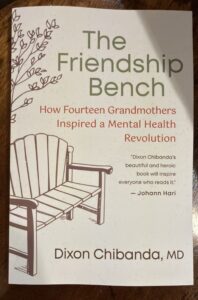
I picked up The Friendship Bench at chechebooks this weekend. I started reading it yesterday. By the third chapter, I had stopped underlining and simply sat with it.
That is what a certain kind of book does. It does not inform you. It returns you to something you already sensed but had not yet found words for.
The word I found was “kufungisisa”. A Shona word for a particular kind of suffering: thinking too much. It does not appear in the Diagnostic and Statistical Manual of Mental Disorders. No pharmaceutical company has designed a drug to treat it. But anyone who has carried unprocessed grief, the weight of unpaid debts, the slow erosion of dignity that poverty brings, will recognize it immediately. It is the mind turned inward and against itself.
Dr. Dixon Chibanda’s answer to this condition was not to build more clinics or train more psychiatrists. In his 2018 TED talk, he mentioned that he was one of the 12 psychiatrists, in Zimbabwe, for a population of approximately 14 million. His answer was a wooden bench, placed in the community with an elder woman to sit on it.
Curiosity is an underrated form of courage.
We tend to celebrate the big leaps; the career pivots, the bold decisions, the published books. But some of the most important journeys begin with something quieter: walking into a bookshop on a Saturday, letting your hand rest on a spine you weren’t expecting, and deciding to follow the thread.
That is how self-discovery actually works in my experience. Not through grand declarations, but through the accumulation of small, honest encounters with ideas that challenge and expand us. A book picked up on a weekend. A word from another language that names something you have been carrying without language. A grandmother’s voice, recorded on a page, telling you something you needed to hear.
The Friendship Bench gave me several such moments.
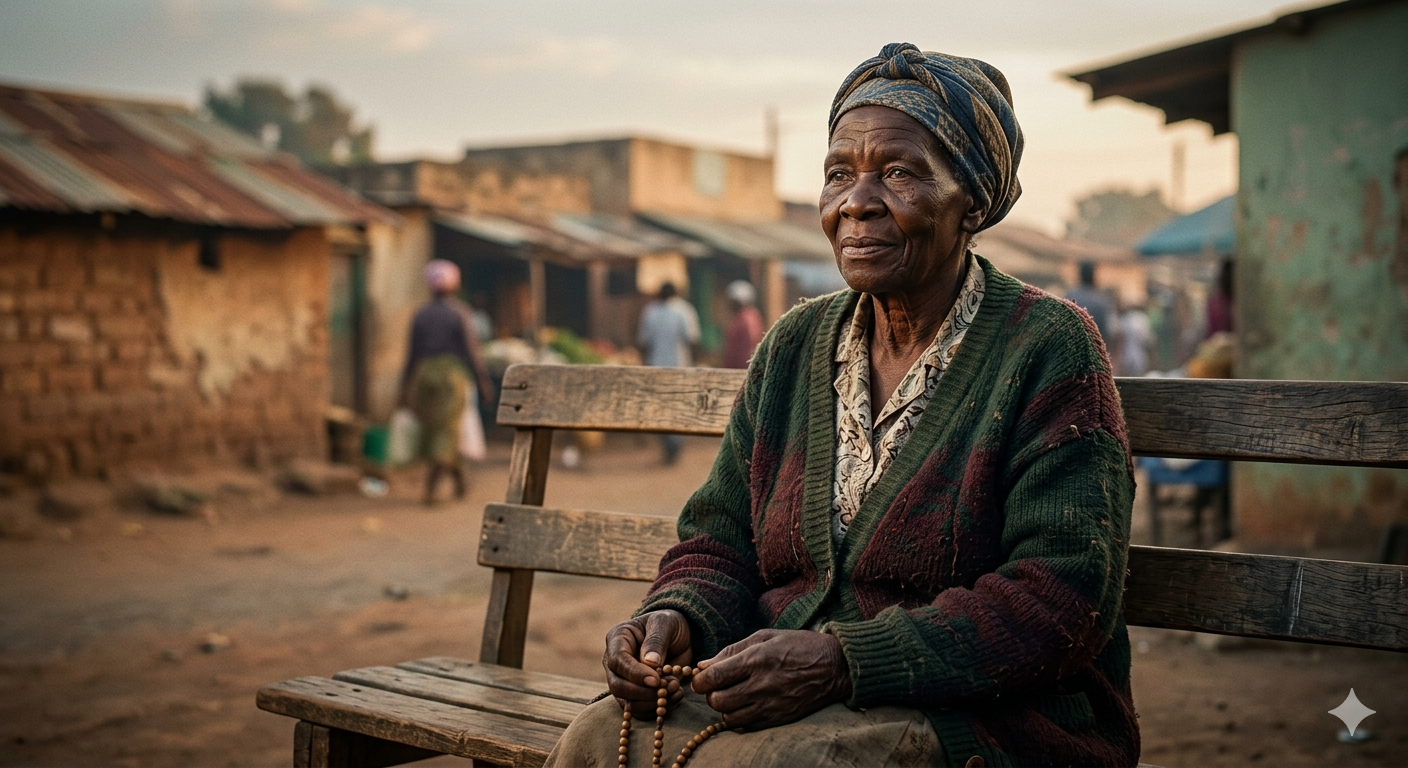
The Friendship Bench is one of the most quietly radical mental health interventions of our time, precisely because it refuses the premise that healing must be clinical, credentialed, or expensive. Instead, it asks a different question: who in this community already holds people together? The answer, in Zimbabwe as across much of the African continent, is grandmothers. Women who have buried children, survived political violence, raised families on nothing, and emerged with something that cannot be taught in a lecture hall; presence.
What the grandmothers understood, and what the evidence eventually confirmed, is that the quality of human attention is itself therapeutic. The timbre of a voice. The steadiness of eye contact. The willingness to sit with someone in their pain without rushing to fix it. These are not soft additions to mental healthcare. For the majority of the world’s population, they are mental healthcare.
There is a question I have been sitting with since reading Priya Parker’s The Art of Gathering: why do we gather? Parker writes that we gather to solve problems we cannot solve alone, to celebrate and mourn, to need one another, to build. But the more honest question, the one that exposes our blind spots, is who is missing from the gathering, and why. Inclusion does not begin with a seat on the bench. It begins with the clarity of purpose that determines who belongs at the table in the first place. The Friendship Bench understood this instinctively. The grandmothers were not added as an afterthought to a system designed without them. They were the system. When we fail to ask why we are convening, why we are designing an intervention, building a program, writing a policy, we risk excluding the very voices that carry the solution. In Mbare, the solution had been sitting on a wooden bench all along. We simply had not thought to ask why it was there.
This matters far beyond Zimbabwe.
Across Africa, the burden of common mental disorders, depression, anxiety, the psychic toll of poverty, falls on communities least equipped by conventional systems to absorb it. What that gap looks like in practice is a mother in Mbare who cannot name what is wrong with her but has stopped eating, stopped working, stopped believing that tomorrow will differ from today. It looks like a farmer whose failed harvest has become something heavier than financial loss; a conviction of personal failure that no microfinance scheme will reach.
The connection between material poverty and mental poverty is not metaphorical. It is structural. A bad agricultural yield does not merely empty a family’s granary; it empties their capacity to imagine a way forward. A mind consumed by kufungisisa cannot engage with extension services, cannot absorb training, cannot organize with neighbors around collective solutions. The food system transformation that development practitioners are so earnest about cannot take root in communities where the interior life has been left untended.
What the Friendship Bench offers development practice is not a detour from its goals. It is a missing foundation.
We have learned, slowly and at great cost, that agricultural transformation without women’s economic empowerment is an incomplete project. We are beginning to learn the same about mental health. Communities cannot flourish when their members are quietly drowning in shame and loneliness. The sense that the burdens of life must be carried alone.
The grandmothers already knew this. They have always known it. What Dr. Chibanda’s work did was create the conditions for the world to finally pay attention.
The lesson is not that grandmothers can replace mental health systems. It is that systems built without grandmothers, specifically without the wisdom of those who have actually lived inside the communities they serve will always be incomplete. The bench is not a workaround for underfunded healthcare. It is a model of what community-centered healing looks like when it begins from the inside out.
I am still reading. Still underlining. Still finding, in someone else’s story, the words for things I have long known but not yet said.
That, too, is what books are for.
And sometimes, all it takes is the curiosity to walk into a bookshop and pick one up.
Back To All