The Word and the Work: Phuthuma Nhleko, architect of the African Renaissance
SHARE


There is a particular kind of African leader who does not announce himself. Who enters a room and you feel the shift before you locate its source. Who builds quietly, and lets the continent speak for him.
Phuthuma Nhleko is that kind of leader.
I first encountered him not through a podium or a press release, but through the work itself. I was leading the Africa Against Ebola Solidarity Trust, a coalition built in the white heat of the 2014–2016 West Africa outbreak, when the world had pledged billions and the continent had pledged something harder to quantify: itself. Nhleko was instrumental in establishing and running that Trust. He did it with the same unhurried gravity that, I would later learn, marks everything he does. He did not need his name on it. The work was the point.
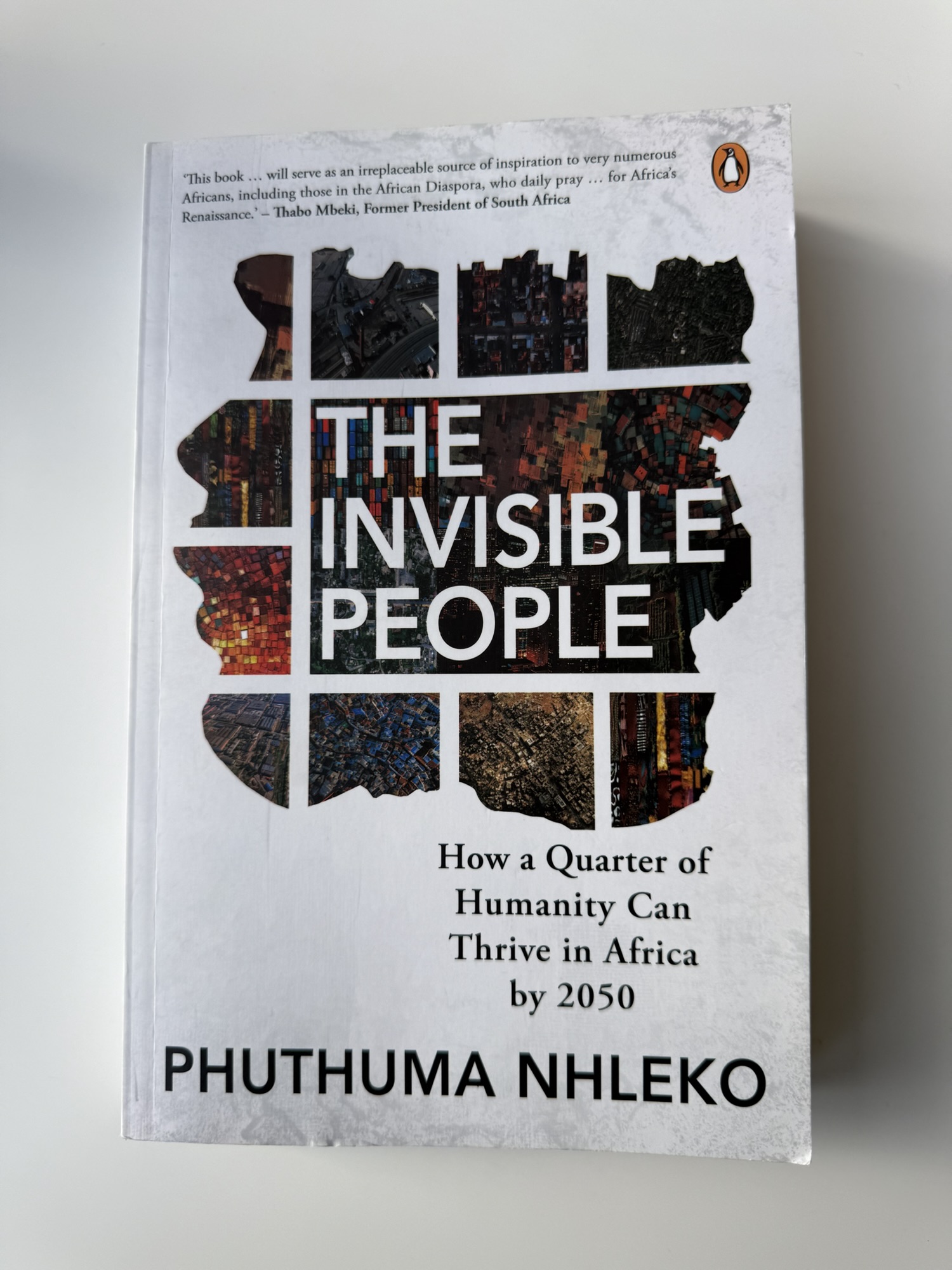
Reading The Invisible People, Nhleko’s sweeping meditation on Africa’s identity, history, and economic potential, I kept thinking about another African who did not wait to be invited to the table of civilisation. He simply reminded the world that the table had been built on African ground: Cheick Anta Diop. A Senegalese scholar, physicist, historian, and arguably the greatest intellectual architect of modern African consciousness. Two men, separated by decades and disciplines, who nonetheless belong to the same conversation.
The striking parallels
Diop spent his life dismantling a perception. The misconception that Africa entered history only through the door of colonialism; as a recipient, a patient, a problem to be managed. His scholarship, from Nations Nègres et Culture to Civilisation ou Barbarie, was relentless in its insistence that Egyptian civilisation was African civilisation, that the Mediterranean world drank deeply from the well of the Nile, and that the erasure of this inheritance was not accidental but deliberate.
But Diop was never merely a critic. He held, as a matter of conviction, that one can only critique with authority when one carries an alternative. His life’s work was not protest, it was counter-proposition. He did not just say: “you are wrong about Africa.” He said “here is what is true, and here is the evidence, and here is what we build on it.”
Nhleko opens with the same wound and the same refusal. He quotes the historian Bruce Gordon: “Africa was in the Bible long before the Bible was in Africa.” He traces how Judeo-Christian beliefs are rooted in ancient Egyptian, African, and Afro-Asiatic cultural practices. He notes, with a kind of measured outrage, that even at the coronation of King Charles III, a royal historian felt compelled to explain that the ritual purification undertaken by the new king in the church was reminiscent of a pharaonic practice without, of course, naming Egypt as teacher.
This is what both men are doing, across time: insisting on credit where credit is due, not out of sentimentality, but because the denial of that credit, as Nhleko writes, “robs parts of the world like Africa of their identity” and, more prosaically, of intellectual property and monetary gains too.
Diop made this case in the archive. Nhleko makes it in the boardroom.
The Scholar and the builder
Diop was a prophet and a scholar. He restored the memory. He “remembered a dismembered history” to borrow Ngũgĩ wa Thiong’o’s luminous phrase. What Diop gave Africa was a foundation. The intellectual and moral ground on which to stand.
Nhleko is the builder on that ground.
Consider the arc of his career. CEO and Chairperson of MTN, which he grew into a pan-African telecommunications giant connecting hundreds of millions of people who had never had reliable connectivity before. As Chairperson of the Johannesburg Stock Exchange, one of the most consequential financial institutions on the continent. As Co-founder of Phembani Group, investing in the resource and energy infrastructure that developing African economies require.
Where Diop wrote about Africa’s right to own its civilisational inheritance, Nhleko has been quietly engineering the structures through which Africa can own its economic future. Where Diop argued that Africa must strengthen its collective identity, Nhleko has been building the connective tissue namely the networks, the capital, the institutions through which a collective African economy becomes reality.
This is not a metaphor. This is the thing itself. Through his work, Nhleko becomes something Diop never claimed to be: the operationalizer of the dream.
The Invisible People
The Invisible People carries a challenge for my generation: the Pan-African moment of the 1960s is ripe for recreation, and that the drive toward a redefined African identity that faltered in the mid-2000s must find a new form. One that aims at the future rather than merely grieving the past.
James Baldwin, in the famous 1965 Cambridge debate, said something that Nhleko retrieves with care: it was only when Africa stood on the world stage on its own terms, through anti-colonial struggle, that the African-American was able to imagine a self beyond a savage or a clown. Africa’s assertion of dignity abroad changed what was possible at home, and vice versa.
Nhleko understands this dynamic. His book is not nostalgic. It is operational. He is not asking Africa to look backward and recover what was lost. He is asking Africa, and the African business community in particular, to understand that the question of identity is not “soft.” It is the hardest, most structural question of all. Because without it, the capital flows without ownership. The growth happens without pride. The connection comes without belonging.
The silent tradition
I think often about what Ebola taught me. About how, during that outbreak, it was a neighbor, a local shopkeeper, a farmer who acted as the first responders. The humanity Africa demonstrated was not manufactured by crisis; it was revealed by it. It had always been there, hidden in the networks, the community, the quiet infrastructure of care that never makes it onto a corporate balance sheet.
Nhleko operates in that same silent tradition. He led without fanfare during the Africa’s response to Ebola in West Africa. He has built without ego across decades. He has invested in infrastructure because infrastructure is care at scale. It is the material expression of believing that African lives deserve the conditions in which they can flourish.
Diop said: remember who you are. Nhleko says: now build accordingly.
The unamed biography
What strikes me most, reading The Invisible People against the backdrop of Nhleko’s career, is that Africa’s Renaissance is not some distant event. It is already happening.
It is visible in the mobile money systems that transformed how 300 million Africans transact. It is visible in Nollywood, the third-largest film industry on earth. It is visible in Black Panther’s Wakanda, a fictional African superpower that proved the global market for African dignity is enormous and hungry. It is visible in every African entrepreneur who builds from the continent rather than in spite of it.
What Nhleko gives us, in the book and in the life, is the argument that this Renaissance requires both the intellectual and the institutional. Both the Diop who excavates the truth and the Nhleko who builds the structures that make the truth liveable.
Africa does not need to choose between its philosophers and its builders. It needs both. It needs to understand that they are, at their deepest, doing the same work. And it needs to hold to the discipline that both Diop and Nhleko, in their different registers, practised all their lives: that one only earns the right to critique when one has an alternative. Not a complaint, but a counter-proposition. Not a grievance, but a blueprint.
Phuthuma Nhleko’s The Invisible People is a definitive text for those who believe Africa’s story is still being written and who intend to be among its authors.
That is what separates the Renaissance from the resentment.
Back To All